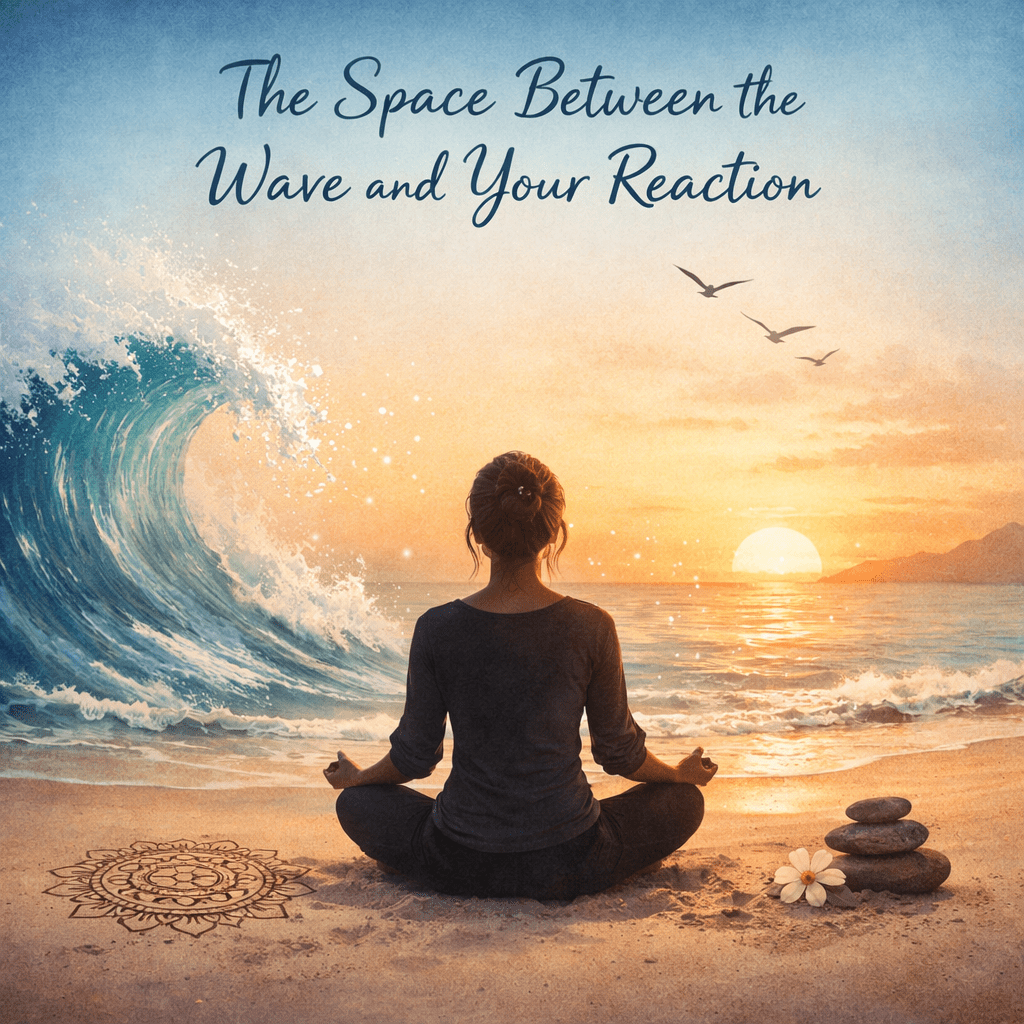
There is a strange moment most people live through without ever naming it.
It is the second where emotion enters the room before words do.
A shift in energy. A silence that feels heavier than sound. A change in tone that the body notices long before the mind can explain it.
And in that space, something powerful happens.
A decision gets made.
Not always consciously.
Not always fairly.
But quickly.
Do I fix this. Do I explain this. Do I smooth it over so everything feels okay again.
Or do I stay with myself long enough to not disappear inside it.
Most people are never taught how to sit in that moment.
So they learn patterns instead.
Some get stuck in emotional heaviness. They take responsibility for everything they feel around them, carrying more than they were ever meant to hold, believing love means constant repair.
Some move into forced lightness. They smile through discomfort, ignore their inner signals, and push for positivity before anything is truly processed.
Some shut down completely. They disconnect to avoid overwhelm, choosing distance over vulnerability because connection feels too unpredictable.
And most of the time, these are not conscious choices.
They are nervous system habits.
Ways the body learned to stay safe.
But there is another way to move through emotional waves.
It is quieter. Less reactive. More grounded.
It begins with a pause.
Not to ignore what is happening.
But to notice it without becoming it.
To say internally, I feel something shifting, but I do not need to abandon myself to respond to it.
This is where mindfulness stops being an idea and becomes a lived practice.
Because in that pause, you create space.
Space between feeling and reaction.
Space between emotion and action.
Space where you get to choose who you are in that moment instead of defaulting to who you used to be.
In relationships, this can look simple on the outside.
It can look like not rushing to fix tension immediately.
It can look like taking a breath instead of over explaining.
It can look like stepping away when things feel too charged and coming back once your system has settled.
And when you return, you are no longer reacting from urgency.
You are responding from clarity.
That is where connection stops becoming fragile and starts becoming real.
And then there is something people often forget in the middle of emotional growth.
Joy.
Not as a reward for getting everything right.
But as a regulation tool. A return to self.
When life feels heavy, there is wisdom in coming back to simple things that remind you you are still here.
Creating something with your hands.
Sitting in stillness with music.
Laughing at something small.
Letting yourself play without purpose.
Even something as simple as drawing shapes, patterns, or mandalas can become a way of coming back into your body when your mind feels loud.
Not because it solves anything.
But because it reminds you that you are safe enough to soften.
And here is the truth most people never get told clearly enough.
You do not have to choose between loving others and loving yourself.
You do not have to disappear to keep connection.
You do not have to fix every wave to stay connected to the shore.
You just have to learn how to return to yourself again and again.
Even after reaction.
Even after overwhelm.
Even after the moment didn’t go the way you hoped.
Because the power was never in getting it perfect.
It was always in your ability to come back.
So if you are reading this in a moment where everything feels a little too loud inside you, pause here with me for a second.
Not to change anything.
Not to solve anything.
Just to notice that you are here.
Still you.
Still capable of returning.
Still learning how to meet your own waves without fear.
And that alone… is enough for today.

